Are you still vibe coding, or are you already shaping your prototypes with language and user insight? My Claude Code setup
Most teams are experimenting with AI right now. Prompting here, prototyping there, a bit of Figma, a bit of code. It feels fast, creative, sometimes chaotic. Many call it vibe coding.

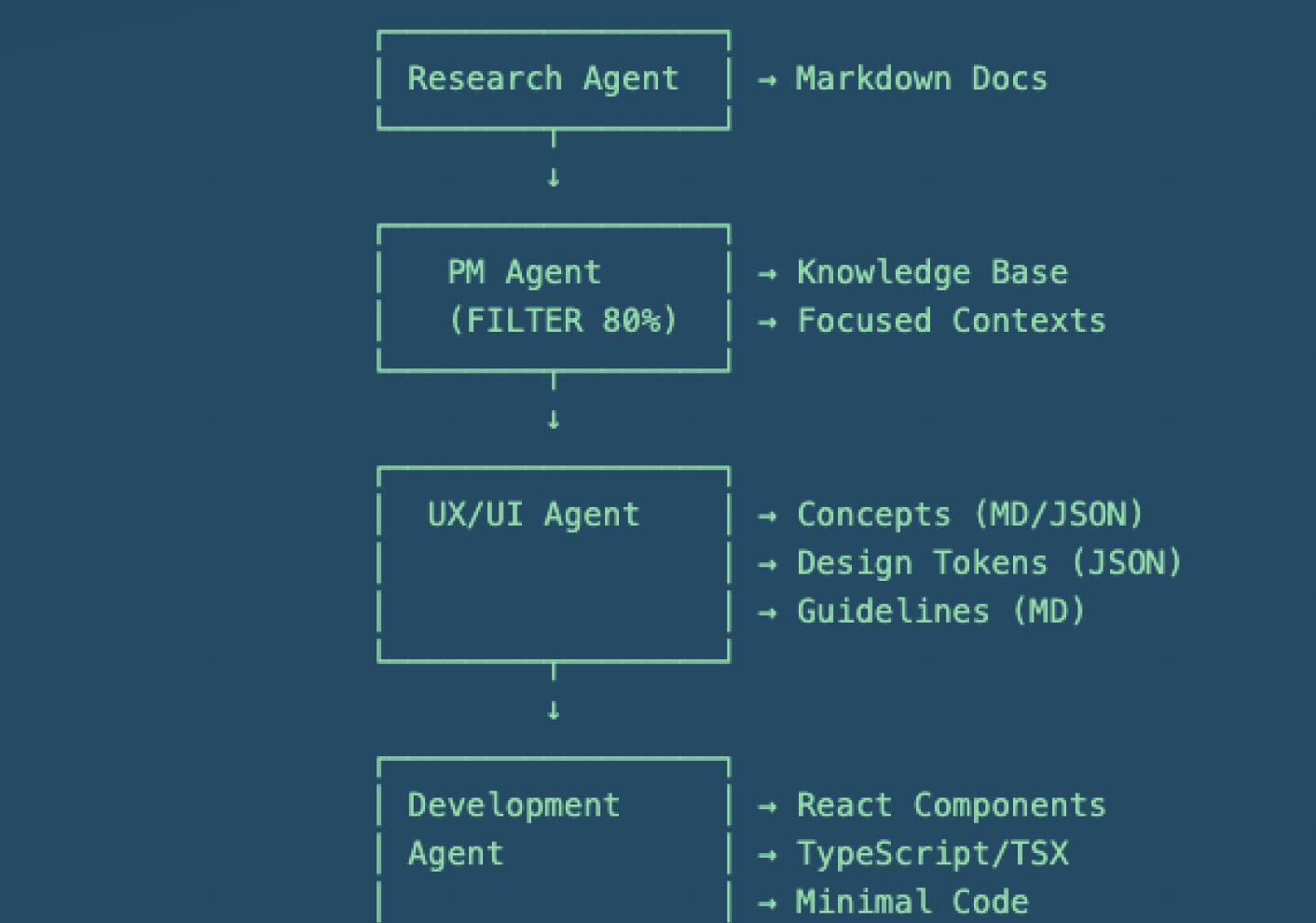
From Vibe Coding to a Claude Code Setup
That’s exactly where I started as well. What changed over time is that this is now my Claude Code setup. This is what I call Vibe Coding, Level 2.
Instead of starting with a PRD or a roadmap, I start with the product idea itself. I give the system clear, user-centered constraints and goals and let it generate the first working flows as code-level prototypes. These flows can include AI interactions or work perfectly fine without them. The focus is not documentation, but making an idea tangible as early as possible.
When more context made things worse
When I first worked with AI for product discovery and prototyping, I did what most people do: I provided a lot of context. Full research, full user insights, edge cases, ideas, inspirations. My assumption was simple. More context should lead to better results.
The opposite happened.
The more context I exposed at once, the more cluttered the interfaces became. Everything felt equally important. Screens tried to do too much. The outcome wasn’t bad design, but it lacked calm, focus, and direction.
The missing piece was hierarchy
That’s when I realized the issue wasn’t AI. It was the missing hierarchy.
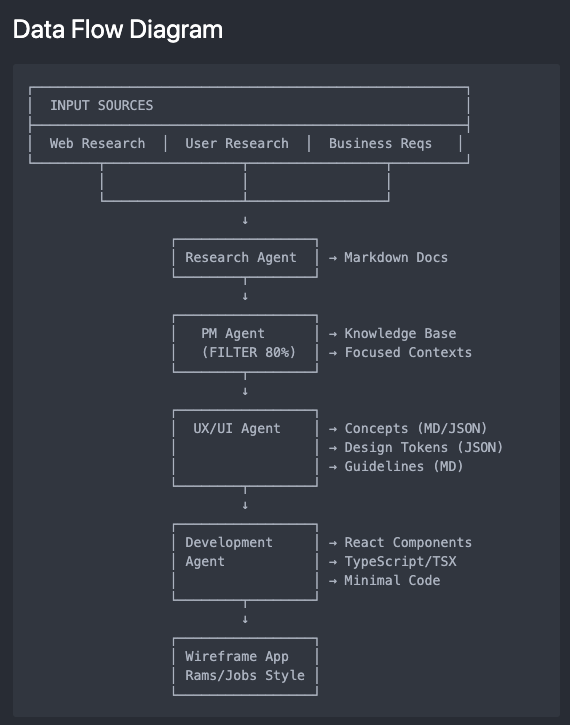
What changed my results was introducing a step-by-step flow where context is not shared globally, but handed over deliberately from one stage to the next. Research can stay broad, product decisions must become selective, UX turns priorities into explicit constraints, and implementation only sees what is truly meant to shape the interface.
Once I worked this way, the results changed immediately. Interfaces became simpler and more intentional, not because I told the system to “design less”, but because it no longer had access to unnecessary information.
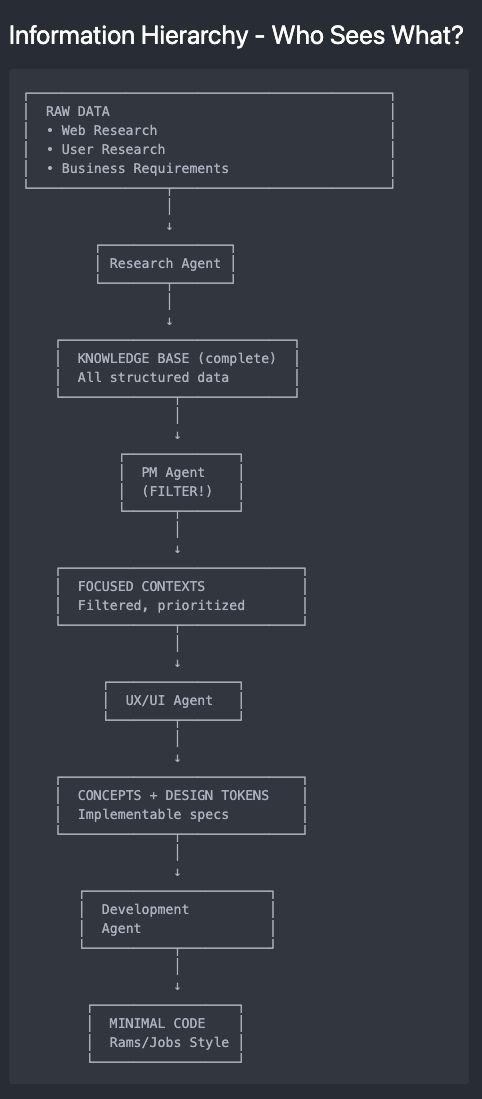
Vibe Coding, but with structure
This learning is what I’m now turning into my Claude Code setup. Instead of one large prompt or a single all-knowing AI, I’m building a controlled flow with clear handovers between roles. I still experiment and vibe at the beginning, but in a way that allows reduction to happen naturally over time.
What’s different in my setup is that I don’t tell the system exactly what to build. I tell it how users think, what they need, what matters, and what should be ignored. From there, screens, interactions, and logic emerge already aligned with product intent.
I still vibe. But I vibe with structure.
What’s next
Later on, this setup will also be able to plan more creative workflows and maybe team collaboration. That’s where it gets really interesting, but I’ll save that for later in 2026.
For now, I’ll show a short lightning demo of this Claude Code setup on January 26 in Munich at the Claude Code Community Meetup. If you’re curious how something like this could work for your product or team, feel free to reach out for a demo.
And for those who want to go deeper: the third flight of my AI-first Masterclass starts in February. We focus on controlling AI to build better interfaces directly in code, not just as static prototypes in Figma. The feedback from previous participants has been very encouraging.
Vibe Coding isn’t going away.
The question is whether you let it stay chaotic, or turn it into something you can actually steer.